Terminale · The United Kingdom and its nations · Learning journey
Four Nations, One Kingdom? The UK Through Football
Why does the UK send four football teams to the World Cup, but only one team to the Olympics?
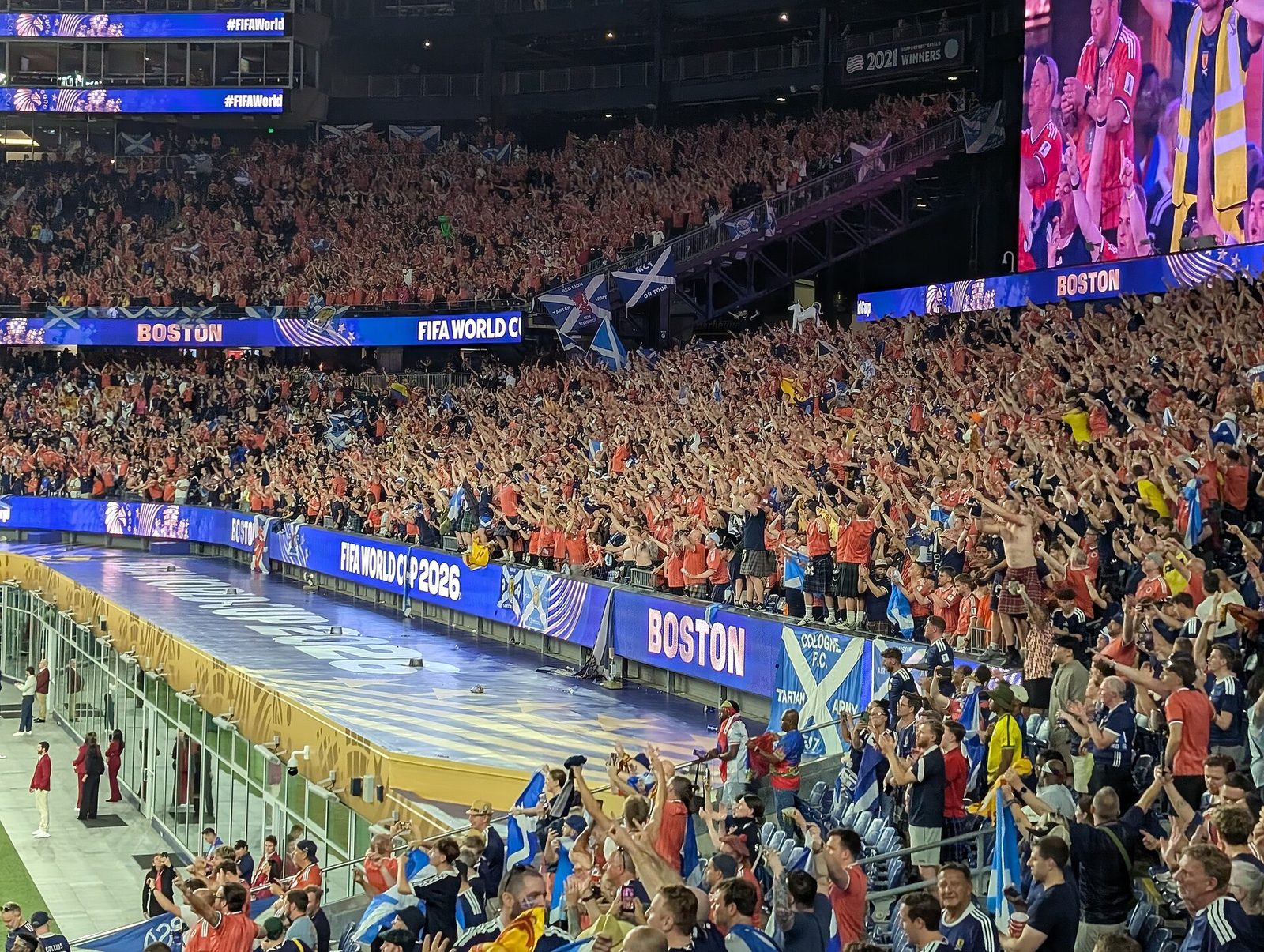
Scotland fans in Boston, at the 2026 FIFA World Cup, June 2026. Photo: Gudlator, CC BY-SA 4.0, via Wikimedia Commons.

Look, then guess
Look at the photo for one minute, in silence. Then talk with a partner.
- In this photo, I can see…
- The fans are waving… / wearing…
- The screens say… so I think this is…
- They might be fans of… because…
- They look… I guess their team has just…
Who are they?
They are Scotland fans, nicknamed the Tartan Army, in Boston (USA) in June 2026. Scotland had just won their first match of the World Cup, against Haiti. It was Scotland’s first men’s World Cup since 1998.
Now think: Scotland is part of the United Kingdom. So why is there a Scotland team at the World Cup, and not a “UK” team?
This is the big question of our learning journey. You will not answer it today. Each session gives you one more piece of the puzzle, and at the end you will give your own answer in a five-minute talk.
Your learning journey
- 1 · Four shirts, one flagWhy four teams? Flags, nations, capitals.
- 2 · The night Hampden shook18 November 2025, and a summer in America.
- 3 · Burns, Glasgow and EdinburghA poet, a song the world sings, two cities.
- 4 · Belfast: walls and an agreementPeace walls, murals, 1998.
- 5 · Create your own gameFour Nations Cup: write the rules, play, improve.
- 6 · Debate and referendumIs the UK still united? Then your final task.
 Go further · new sessionWho gets to be English?A mural in Manchester, Plato’s Republic, the flags of 2025 and the Windrush: what makes someone part of a group?Open the session →
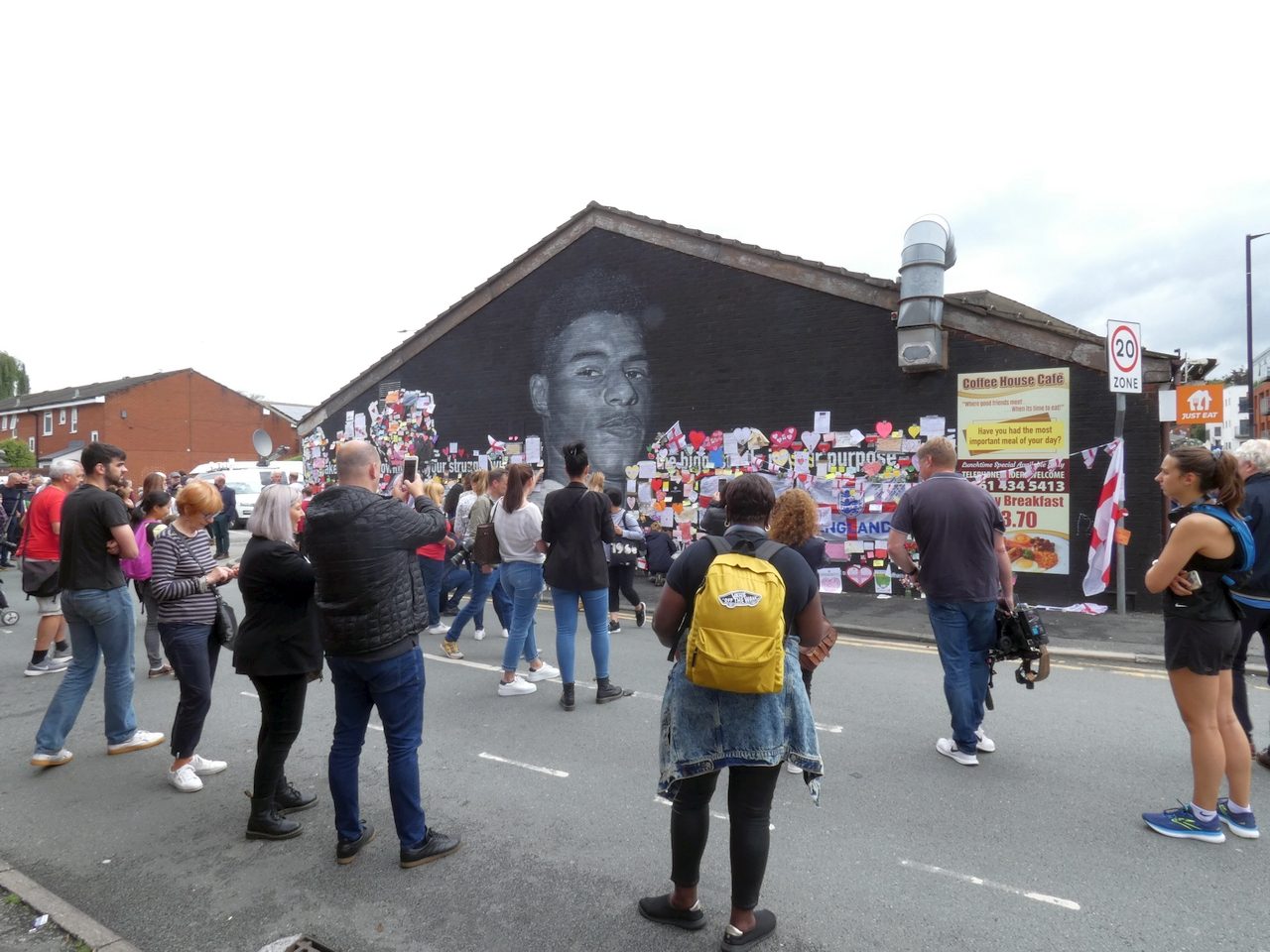
Photo: Gerald England, CC BY-SA 2.0, via Wikimedia Commons · mural by Akse P19.

How we learn in this journey
Four habits of smart learners
- I like your idea, and I would add…
- I see it differently because…
- Can you explain what you mean by…?
- Another angle could be…
- Let’s check this together: …
Each session has one learning method to try: dual coding, retrieval practice, flashcards, explaining to a classmate, spaced revision and “what I know / what I don’t know yet”. Use them in English and in every other subject.
A smart learner talks
Computer voice: Isabella (British English).
Transcript
Today I tested myself on the Hampden match instead of reading my notes again. I closed my notebook and wrote everything I remembered in three minutes. I remembered the score and the overhead kick, but I forgot the name of the last scorer. So I made a flashcard with Kenny McLean on the back. I will review it tomorrow, and again next week. What I know: the four nations and their capitals. What I don’t know yet: the date of the Good Friday Agreement. I still need to review it.
Badges you can earn
Badges reward effort and progress, not being the best. There is no ranking. Keep your badge card in your notebook or on the ENT, and collect your Journey Certificate at the end.
Ancrage programme. Terminale, voie générale, LVA/LVB, B1 vers B2. Axe 6 « Le Royaume-Uni et ses nations » (BO n° 22 du 29 mai 2025, repères culturels éduscol) : objets d’étude « Un Royaume toujours uni ? », « Glasgow et Édimbourg », « L’Irlande du Nord : identités plurielles ? ».
Déroulé conseillé. 6 séances de 55 min environ, plus la tâche finale. Chaque séance s’ouvre par le même rituel de 5 minutes, « Quick Recall », puis suit des blocs de temps affichés en haut de l’onglet.
Garder la classe sereine. On ne demande jamais aux élèves leur propre nationalité, religion ou identité. On parle des nations, des supporters, des documents. Pour le référendum de la séance 6, vote à bulletin secret sur une question d’idées.
Faits vérifiés le 8 octobre 2026 : Scotland 4-2 Denmark le 18/11/2025 (Scottish FA, BBC Sport) ; Haïti 0-1 Écosse en juin 2026 à Boston, élimination au premier tour (UEFA, BBC Sport) ; photo Commons datée du match, description « Scotland’s victory over Haiti ».
Session 1 · Why four teams?
Four shirts, one flag
- 5′ Quick Recall
- 10′ Four shirts
- 15′ Read and listen
- 10′ Draw the flag
- 10′ Explain it
- 5′ Exit ticket
Quick Recall · 5 minutes
What do you already know about the UK? There are no wrong answers today.
- Name the four nations of the UK.
- Name a British football team, player or song.
- Name a city in the UK, other than London.
- Write one word you connect with Scotland, and one with Ireland.
Check your answers
I remembered… · I forgot… · My partner reminded me that…
Four shirts
These four shirts all come from the same country. How is that possible? Make two guesses with a partner.
Shirts drawn for this learning journey, inspired by the home colours of the four teams.
- The white shirt with a red cross is probably…
- I think there are four teams because…
- Maybe each part of the UK…
- My guess is that… / It could be that…
Four nations, one state
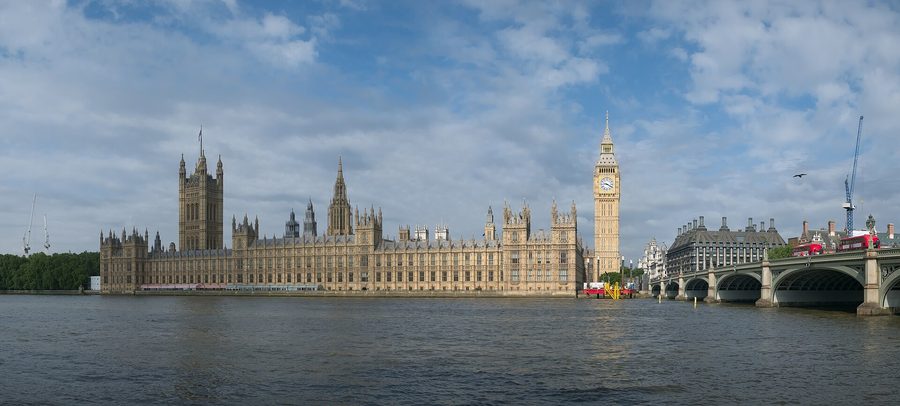
Capital: London
UK Parliament: Westminster
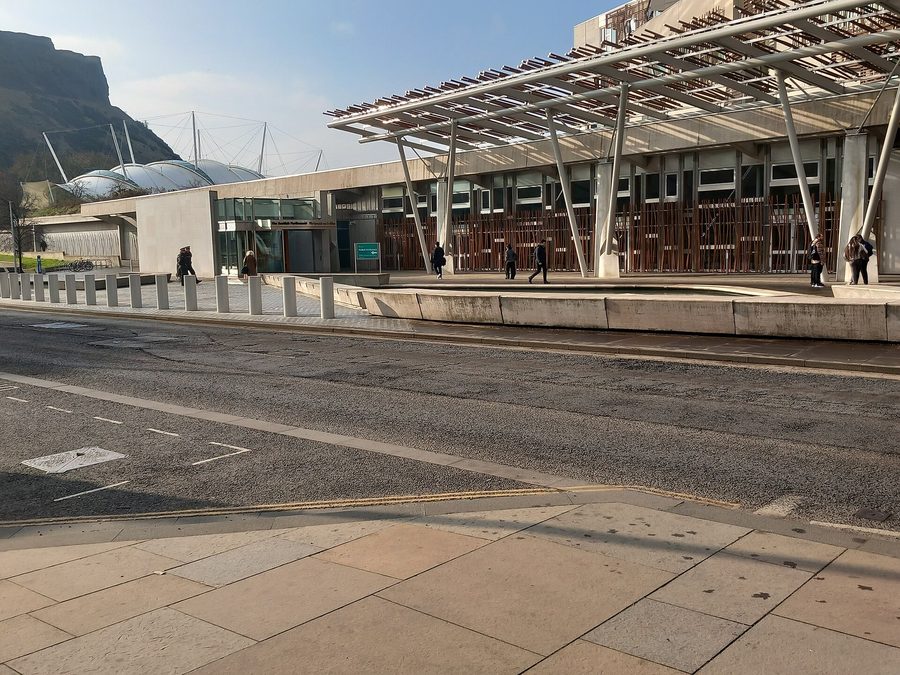
Capital: Edinburgh
Scottish Parliament: Holyrood (since 1999)
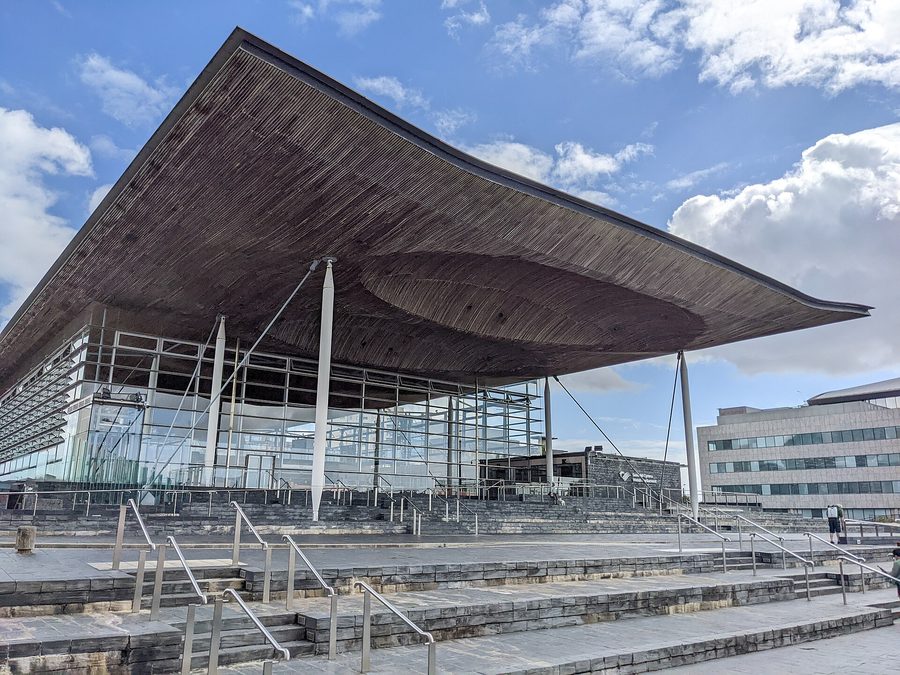
Capital: Cardiff
Welsh Parliament: the Senedd (since 1999)
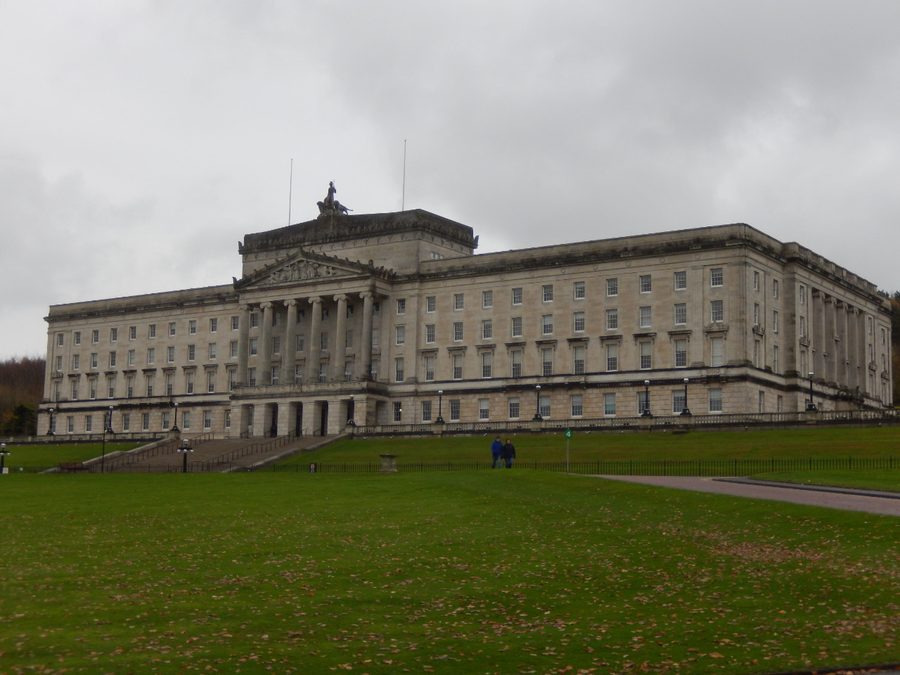
Capital: Belfast
Northern Ireland Assembly: Stormont (since 1998)
Photos: Westminster, Domob, CC BY-SA 4.0 · Holyrood, Darren J. Prior, CC BY 4.0 · Senedd, The wub, CC BY-SA 4.0 · Stormont, Stephen McKay, CC BY-SA 2.0 (Geograph). All via Wikimedia Commons.
Read: Four nations, one state
The United Kingdom of Great Britain and Northern Ireland is one state, but it is made up of four nations: England, Scotland, Wales and Northern Ireland. Great Britain is the name of the biggest island, with England, Scotland and Wales on it. Northern Ireland is in the north-east of the island of Ireland. Almost 70 million people live in the UK, and more than eight people in ten live in England.
Football explains a lot about this unusual family. In 1863, the Football Association (the FA) was created in England and wrote the first modern rules. Scotland created its own association in 1873, Wales in 1876 and Ireland in 1880. The first international match in history was Scotland v England, in Glasgow, on 30 November 1872. It ended 0-0. When FIFA was born in 1904, the four British associations already existed, so they kept their own teams. They still do today. They even have four of the eight votes on the IFAB, the body that decides the laws of the game.
The Olympics are different. There is only one team for the whole country: Team GB. A runner from Cardiff and a swimmer from Glasgow wear the same kit. And athletes from Northern Ireland can choose: they can compete for Team GB or for Ireland.
Four nations, one state
Computer voice: George (British English).
Transcript
The United Kingdom of Great Britain and Northern Ireland is one state, but it is made up of four nations: England, Scotland, Wales and Northern Ireland. Great Britain is the name of the biggest island, with England, Scotland and Wales on it. Northern Ireland is in the north-east of the island of Ireland. Almost seventy million people live in the UK, and more than eight people in ten live in England. Football explains a lot about this unusual family. In 1863, the Football Association, the FA, was created in England and wrote the first modern rules. Scotland created its own association in 1873, Wales in 1876 and Ireland in 1880. The first international match in history was Scotland against England, in Glasgow, on the thirtieth of November 1872. It ended 0-0. When FIFA was born in 1904, the four British associations already existed, so they kept their own teams. They still do today. They even have four of the eight votes on the IFAB, the body that decides the laws of the game. The Olympics are different. There is only one team for the whole country: Team GB. A runner from Cardiff and a swimmer from Glasgow wear the same kit. And athletes from Northern Ireland can choose: they can compete for Team GB or for Ireland.
Four nations, one state: check your reading
Choose the right answer.
Draw the flag
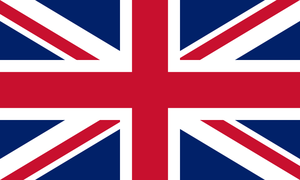
The Union Flag mixes three crosses:
the red cross of St George for England,
the white diagonal cross of St Andrew for Scotland,
the red diagonal cross of St Patrick for Ireland.
Wales is not on it. The Welsh flag shows a red dragon on green and white.
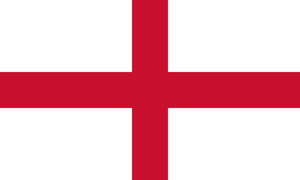
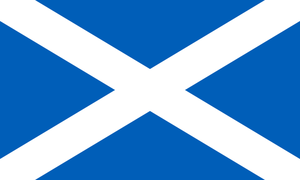
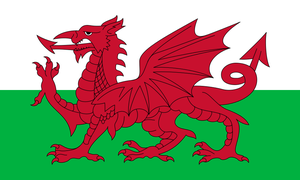
Flags: public domain, via Wikimedia Commons.
Dual coding: a word and a picture
Your memory stores words and pictures in two different ways. If you link a word to a simple drawing, you create two paths back to the same memory. You don’t need to draw well: stick figures and arrows are perfect.
Try it now (10 minutes): draw the Union Flag in three layers, one cross at a time. Next to each layer, write the nation and the saint. Then draw a rough map of the UK with the four capitals.
- I drew… to remember…
- This picture helps me remember that…
- The first layer is… then I added…
- Wales is missing because…
“Wales is not on the Union Flag because the designers forgot it.”
Check
Story. The first Union Flag was created in 1606. By then, Wales had already been joined to England by law (the Laws in Wales Acts of 1535 and 1542), so it was treated as part of the Kingdom of England. Nobody “forgot” Wales, but many people in Wales still ask for a dragon on the flag.
And one more: “Northern Ireland has its own official flag.” Story too. Since 1972, its official flag is the Union Flag. The Ulster Banner, its official flag from 1953 to 1972, is still seen at some sports events.
- I thought it was a fact, but actually…
- The real reason is that…
Explain it: a fan from abroad
Work in pairs. A is a football fan visiting London for the first time. A asks: “Why can’t I buy a UK shirt?” B explains, without notes. Then swap.
Listen and repeat: four nations
Listen, pause after each sentence, repeat aloud. Copy the rhythm, not just the words.
Computer voice: Emma (British English).
Transcript
- The UK is made up of…
- Each nation has its own…
- It goes back to 1872, when…
- At the Olympics, it’s different because…
- So if you want a shirt, you have to choose between…
Four nations, four capitals
Choose the right nation for each clue.
Exit ticket
On a slip of paper or on the ENT: “Today I learnt that… The picture that will help me remember is…”
I reused at least five new words when I spoke.
And if you use today’s method, tick a box for Smart Learner.
Repères. Fondations : FA 1863, SFA 1873, FAW 1876, IFA 1880 ; premier match international 30/11/1872 à Glasgow (Hamilton Crescent), 0-0 ; IFAB : 4 voix FIFA, 1 voix pour chacune des quatre associations britanniques. Laws in Wales Acts 1535 et 1542 ; premier Union Flag 1606.
Badge Word Hunter : l’élève a réutilisé à l’oral au moins cinq mots nouveaux (nation, state, association, flag, cross, saint, compete).
Session 2 · Scotland, a football nation
The night Hampden shook
- 5′ Quick Recall
- 10′ Listen: Football Tonight
- 10′ Self-test
- 10′ Two songs
- 15′ Be the commentator
- 5′ Review
Quick Recall · 5 minutes
Session 1, from memory.
- What are the four nations and their capitals?
- Which three crosses make up the Union Flag?
- Why are there four football teams?
- What is the name of the UK team at the Olympics?
Check your answers
I remembered… · I forgot… · My partner reminded me that…
Before you listen: predict
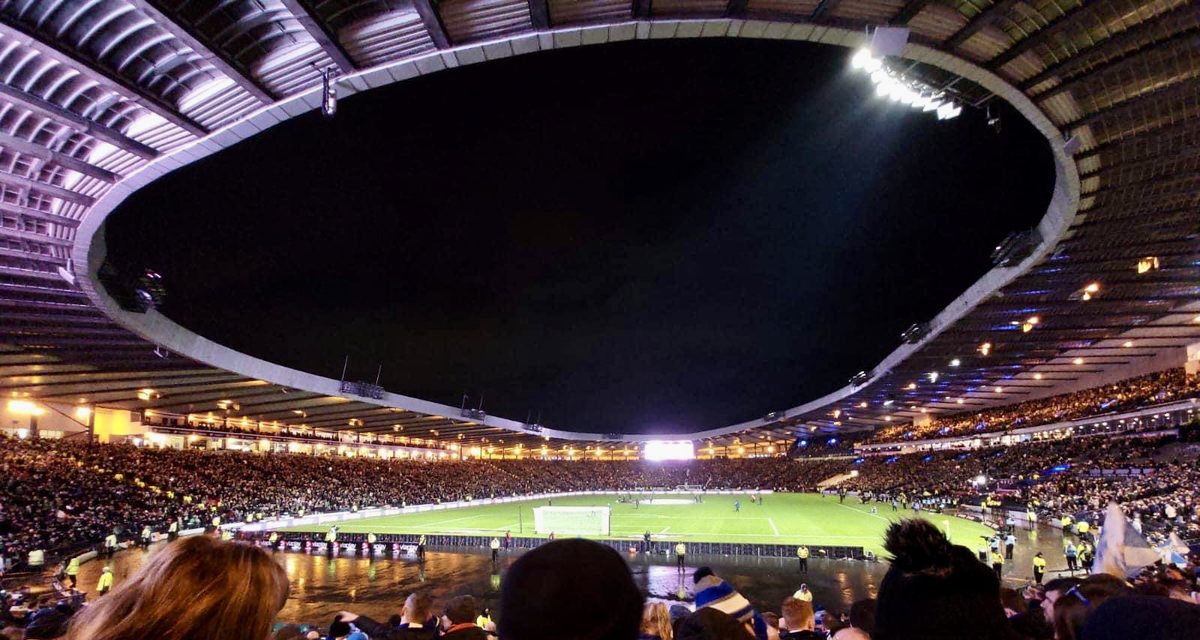
18 November 2025. Scotland need a win against Denmark to go to the World Cup. Final score: 4-2. What do you think happened? Make three predictions.
- I think Scotland scored…
- Maybe Denmark…
- The last goal was probably…
The night Hampden shook
Computer voices: Isabella, Lewis (British English).
Transcript
Presenter (Lewis): Good evening and welcome back to Football Tonight. What a night in Glasgow! On Tuesday the eighteenth of November 2025, almost fifty thousand fans packed Hampden Park. Scotland needed a win against Denmark to go straight to the World Cup for the first time since 1998. Isabella, you were there.
Reporter (Isabella): I was, and I still can’t believe it. After three minutes, Scott McTominay jumped and scored with an overhead kick. Hampden went crazy. But Denmark came back twice: a penalty for 1-1, then 2-2, just after Lawrence Shankland had scored for Scotland. Denmark were down to ten men, but the clock was ticking.
Presenter: And then came added time.
Reporter: Yes! In the third minute of added time, Kieran Tierney curled a shot from outside the box: 3-2. Then, with the last kick of the game, Kenny McLean saw the Danish goalkeeper far from his goal and scored from the halfway line. 4-2! People were crying and singing in the stands.
Presenter: Scotland at the World Cup after twenty-eight years. Thank you, Isabella. And for our listeners in Wales and Northern Ireland, your teams are still in the race: the play-offs are in March.
Football Tonight: true or false?
Listen to the radio report, then choose.
Retrieval practice: test yourself instead of re-reading
Re-reading your notes feels comfortable, but it doesn’t tell you what you really remember. Pulling information out of your memory is harder, and that is exactly why it works.
Try it now: close everything. In 3 minutes, write down all you remember about the match: date, place, scorers, minutes, feelings. Then do the self-test below. Only after that, open the transcript and check in a different colour.
- Today I tested myself on…
- I remembered… but I forgot…
- The part I mixed up was…
- Next time, I will…
Self-test: the night Hampden shook
No peeking! Answer from memory, then check.
Two songs
Before kick-off, the whole stadium sings “Flower of Scotland”. The song was written in the 1960s by Roy Williamson, of the folk group The Corries. It remembers the Battle of Bannockburn in 1314, when the Scottish king Robert the Bruce defeated the army of the English king Edward II. Scotland’s football and rugby teams use it as their anthem.
England and Northern Ireland play “God Save the King”, the anthem of the whole UK. Wales sings “Hen Wlad Fy Nhadau” (Land of My Fathers) in Welsh. So when England play Scotland, the fans don’t even sing the same song.
“Flower of Scotland is Scotland’s official national anthem.”
Check
Story. Scotland has no official anthem. “Flower of Scotland” is used by tradition, at football and rugby matches. Officially, the anthem of the whole UK is “God Save the King”.
- Many people believe… but in fact…
- Officially,… but by tradition,…
What happened next?
26 March 2026 · World Cup play-offs. Wales draw 1-1 with Bosnia and Herzegovina in Cardiff and lose on penalties. Northern Ireland lose 2-0 in Italy. Neither team goes to the World Cup.
31 March 2026 · Wales and Northern Ireland play a friendly in Cardiff: 1-1.
June 2026 · In Boston, Scotland beat Haiti 1-0. Then they lose 1-0 to Morocco and 3-0 to Brazil, and go out after the group stage.
15 July 2026 · England reach the semi-final but lose 2-1 to Argentina in Atlanta.
Be the commentator
In groups of three. Tell the last ten minutes of the match like a radio commentator, without notes: one person per goal, the third one describes the fans. Then each group adds one sentence about the summer of 2026.
Listen and repeat: telling a match
Listen, pause after each sentence, repeat aloud. Copy the rhythm, not just the words.
Computer voice: George (British English).
Transcript
- It’s 2-2 and the clock is ticking…
- In the third minute of added time,…
- Then, with the last kick of the game,…
- The fans are…/ The stadium…
- Sadly, a few months later,…
What went wrong, what I’ll try next
Look at your self-test and your commentary. A mistake is not a failure: it shows you what to practise. We talk about what happened, never about whose fault it is.
- Something that didn’t work was…
- I think it happened because…
- What worked well was…
- Next time, I’ll try…
Got a question wrong? Do the self-test again tomorrow. Getting it right the second time earns the Comeback badge.
I checked my predictions by listening and found four pieces of information.
And if you use today’s method, tick a box for Smart Learner.
Repères vérifiés. 18/11/2025, Hampden, 49 587 spectateurs : McTominay 3′ (retourné), Højlund s.p., Shankland 78′, Dorgu, Tierney 90+3′, McLean 90+8′ du milieu de terrain ; Danemark à dix (Scottish FA, BBC Sport, Sky Sports, Reuters). Barrages 26/03/2026 : Pays de Galles 1-1 Bosnie-Herzégovine, t.a.b. perdus ; Italie 2-0 Irlande du Nord (FAW, BBC Sport). Juin 2026 : Haïti 0-1 Écosse, Écosse 0-1 Maroc, Écosse 0-3 Brésil, éliminée (UEFA, BBC Sport). 15/07/2026 : Angleterre 1-2 Argentine en demi-finale (englandfootball.com, BBC Sport).
Vidéos. Uniquement des pages officielles (Scottish FA, BBC, FAW, England Football), en lien : pas d’intégration de vidéos non officielles. Les paroles de « Flower of Scotland » sont protégées : on la décrit, on ne la reproduit pas.
Badge Sharp Listener : l’élève a corrigé ses prédictions grâce à l’écoute et retrouvé au moins quatre informations du reportage.
Session 3 · Scottish culture, two cities
Robert Burns, Glasgow and Edinburgh
- 5′ Quick Recall
- 10′ Listen: the ploughman poet
- 10′ A song the world sings
- 10′ Make flashcards
- 10′ Two cities
- 10′ Raise a toast
Quick Recall · 5 minutes
Session 2, plus one older question.
- When and where did Scotland beat Denmark 4-2?
- Name two Scotland scorers that night.
- Which battle does “Flower of Scotland” remember?
- Which nation is not on the Union Flag?
Check your answers
I remembered… · I forgot… · My partner reminded me that…
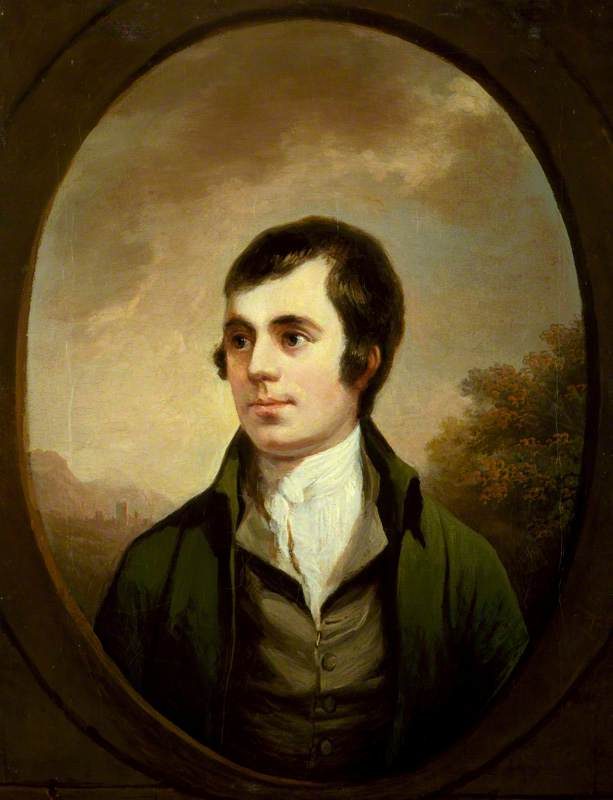

Who is he?
Look at the portrait. When do you think he lived? What was his job? Guess, then listen.
- He looks like…
- Judging by his clothes, he probably lived…
- He could be a… because…
Robert Burns, the ploughman poet
Computer voice: Daniel (British English).
Transcript
Robert Burns was born in 1759 in Alloway, in Ayrshire, in the south-west of Scotland. His family were poor farmers, and as a teenager he worked hard in the fields. He wrote poems and songs in Scots, the language of ordinary people in Lowland Scotland, and in English. His first book came out in 1786 and made him famous almost overnight. People called him the ploughman poet. He died in Dumfries in 1796. He was only thirty-seven. Today he is Scotland’s national poet. Every year on the twenty-fifth of January, his birthday, people all over the world celebrate Burns Night. They eat haggis, someone reads his poem Address to a Haggis, and the evening ends with everybody holding hands and singing Auld Lang Syne. The same song is sung at New Year, called Hogmanay in Scotland, from Sydney to New York, often by people who have no idea what the words mean.
Robert Burns: check your listening
Listen, then choose.
A song the world sings
Burns wrote down “Auld Lang Syne” in 1788. Here are the first verse and the chorus, in Scots.
and never brought to mind?
Should auld acquaintance be forgot,
and auld lang syne!
For auld lang syne, my jo,
for auld lang syne,
we’ll tak a cup o’ kindness yet,
for auld lang syne.
Auld Lang Syne (first verse and chorus)
Computer voice: Fable (British English).
Transcript
“Burns wrote Auld Lang Syne all by himself.”
Check
Not quite. When Burns sent the song to a music publisher in 1788, he explained that it was an old song, which he had taken down from an old man’s singing. He probably rewrote it and added verses of his own. And the tune most people sing today was matched to the words later. So it is a mix of an old folk song and Burns’s pen.
- It’s partly true:…
- Burns didn’t invent it, he…
Make your own flashcards
Flashcards you make yourself work better than ready-made ones: choosing what to write is already learning. Keep them small: one word or one question per card.
Try it now: make 8 cards. Front: a Scots word or a question (What is Hogmanay?). Back: the answer in English, plus a tiny drawing. Test yourself in both directions, then test a partner. Put the cards you got wrong in a “not yet” pile.
- On the front I wrote… and on the back…
- The card I always get wrong is…
- My “not yet” pile has… cards.
- I still need to review…
Two cities
Edinburgh
The capital of Scotland. The Scottish Parliament has met there since 1999, in its modern building at Holyrood. Every August, the city hosts the Edinburgh Festival Fringe, one of the biggest arts festivals in the world. Burns became famous there in 1786.
Glasgow
Scotland’s biggest city, on the River Clyde, once a giant of shipbuilding. Home of Hampden Park and of two famous clubs, Celtic and Rangers. Glasgow hosted the Commonwealth Games in 2014, and again from 23 July to 2 August 2026, when it stepped in to save the Games.
Compare the two cities
In pairs, find two similarities and two differences. Each partner must add an idea the other did not have.
- Both cities…
- Edinburgh is…, whereas Glasgow is…
- Unlike Edinburgh, Glasgow…
- To add to your idea,…
Want to know more about the Commonwealth Games? See the learning journey Getting to Know the Commonwealth.
Raise a toast
At a Burns supper, someone gives a short speech, called a toast, before everybody raises their glass. Write a 5-line toast for an imaginary Burns supper, to Robert Burns or to old friendship. Then read it aloud to your group, or record it on the ENT.
- Ladies and gentlemen, tonight we remember…
- He was born… and he wrote…
- His song reminds us that…
- Every New Year, people around the world…
- So please raise your glasses to…
I read or spoke in front of a group, or recorded myself on the ENT.
And if you use today’s method, tick a box for Smart Learner.
Repères. Burns (né à Alloway en 1759, mort à Dumfries en 1796) ; « Poems, Chiefly in the Scottish Dialect », Kilmarnock, 1786 ; Burns Night le 25 janvier ; « Auld Lang Syne » envoyé en 1788 pour le Scots Musical Museum de James Johnson, avec la mention d’une chanson ancienne recueillie auprès d’un vieil homme ; air actuel associé plus tard. Glasgow 2026 : Jeux du Commonwealth du 23/07 au 02/08/2026, clôture au Hydro (BBC Sport, Olympics.com), Glasgow ayant repris l’organisation après le retrait de l’État de Victoria.
Badge Brave Speaker : l’élève a lu le couplet ou son toast devant un groupe, ou l’a enregistré sur l’ENT, quel que soit le niveau de départ.
Session 4 · Northern Ireland: plural identities
Belfast: walls, murals and an agreement
- 5′ Quick Recall
- 10′ Look at the walls
- 15′ Read and listen
- 15′ Teach your partner
- 5′ Fact or story?
- 5′ Exit ticket
Quick Recall · 5 minutes
Session 3, plus one older question.
- When was Robert Burns born, and when is Burns Night?
- What does “auld lang syne” mean?
- Give one difference between Glasgow and Edinburgh.
- What happened on 18 November 2025?
Check your answers
I remembered… · I forgot… · My partner reminded me that…
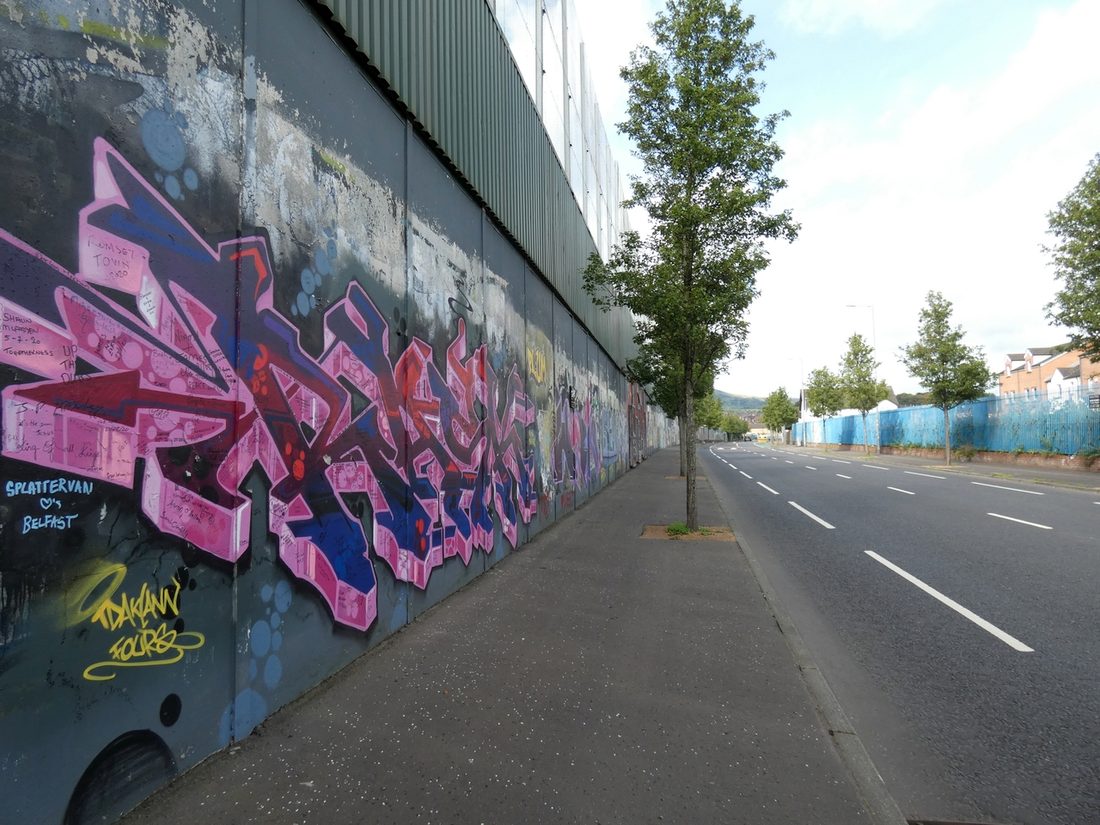

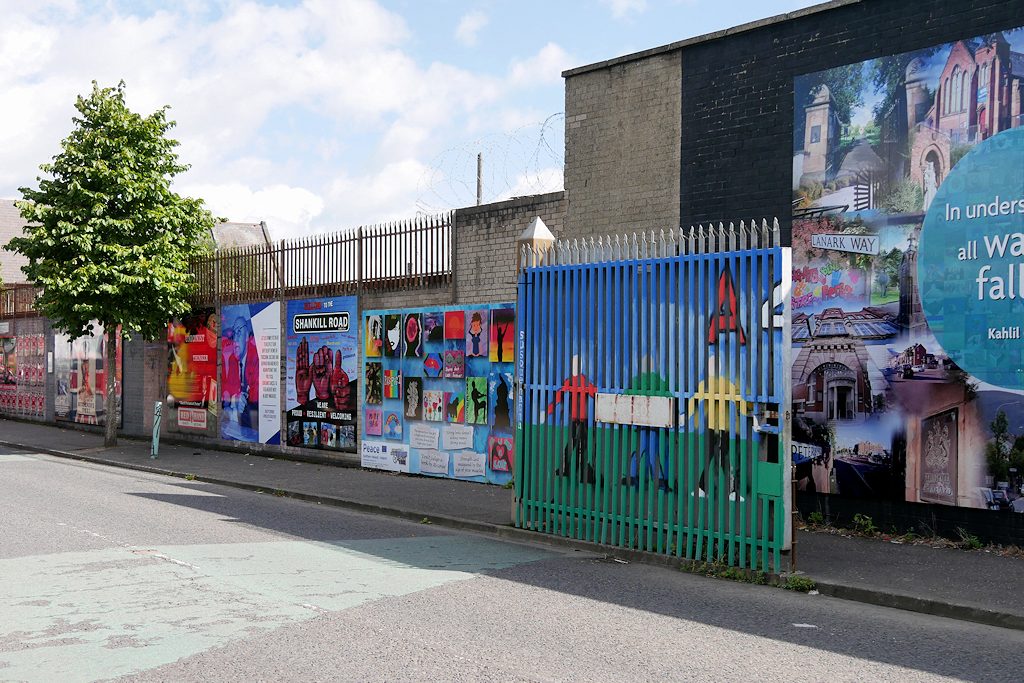

Look at the walls
Describe the two photos. Why would a city build a wall between two streets? Why is there a gate?
- The wall is so high that…
- There is a fence on top, which suggests…
- The gate might be closed at night because…
- The murals show… / The colours make me think of…
- I wonder why…
Read: walls, murals and an agreement
Belfast is the capital of Northern Ireland. In 1921, the island of Ireland was divided. The south later became an independent state, today the Republic of Ireland. Six counties in the north-east stayed in the UK as Northern Ireland.
Two communities live there. Many unionists, mostly from a Protestant background, want Northern Ireland to stay in the UK. Many nationalists, mostly from a Catholic background, would like a united Ireland. From the late 1960s to 1998, a violent conflict known as the Troubles killed more than 3,500 people. In 1969, the first peace walls were built in Belfast to separate neighbourhoods and stop the violence. Many of them are still standing today.
On Good Friday, 10 April 1998, the British and Irish governments and most Northern Irish parties signed the Good Friday Agreement, also called the Belfast Agreement. In May 1998, people voted for it on both sides of the border: in Northern Ireland, 71% said yes. The agreement created an Assembly at Stormont, where unionists and nationalists must share power. It says that people in Northern Ireland can be British, Irish, or both, and that Northern Ireland will stay in the UK as long as a majority there wants it to.
In the 2021 census, 31.9% of people in Northern Ireland described their national identity as “British only”, 29.1% as “Irish only” and 19.8% as “Northern Irish only”. Many others chose a mix. Today, tourists come from all over the world to see the murals. Some murals still celebrate one side of the old conflict; others talk about peace, and visitors write messages of hope on the walls.
Belfast: walls, murals and an agreement
Computer voice: Isabella (British English).
Transcript
Belfast is the capital of Northern Ireland. In 1921, the island of Ireland was divided. The south later became an independent state, today the Republic of Ireland. Six counties in the north-east stayed in the UK as Northern Ireland. Two communities live there. Many unionists, mostly from a Protestant background, want Northern Ireland to stay in the UK. Many nationalists, mostly from a Catholic background, would like a united Ireland. From the late 1960s to 1998, a violent conflict known as the Troubles killed more than three thousand five hundred people. In 1969, the first peace walls were built in Belfast to separate neighbourhoods and stop the violence. Many of them are still standing today. On Good Friday, the tenth of April 1998, the British and Irish governments and most Northern Irish parties signed the Good Friday Agreement. In May 1998, people voted for it on both sides of the border. In Northern Ireland, 71% said yes. The agreement created an Assembly at Stormont, where unionists and nationalists must share power. It says that people in Northern Ireland can be British, Irish, or both, and that Northern Ireland will stay in the UK as long as a majority there wants it to.
Belfast: check your reading
Choose the right answer.
Explain it to a classmate
If you can explain an idea simply, you understand it. If you get stuck, you have just found the gap in your knowledge, and that is useful. This is sometimes called the Feynman technique, after a scientist who tested his own understanding this way.
Try it now: one minute each, no notes. A explains the peace walls; B explains the Good Friday Agreement. The listener asks one “why” question and adds one detail the speaker forgot. Then swap topics and do it again: the second time is always better.
Listen and repeat: explaining Belfast
Listen, pause after each sentence, repeat aloud. Copy the rhythm, not just the words.
Computer voice: Emma (British English).
Transcript
- Let me explain… In simple words,…
- The key idea is that…
- It happened because… and as a result…
- In other words,…
- I’m not sure about… Can you help me?
- You explained… very clearly. You could add…
“The peace walls came down after the Good Friday Agreement.”
Check
Story. Many walls are still standing, and some were even built after 1998. In 2013, Northern Ireland’s leaders set a goal: remove all the peace walls by 2023. The goal was not reached.
And this one: “In Northern Ireland, people can choose to be British, Irish, or both.” Fact. It is written in the Good Friday Agreement, and people can hold a British passport, an Irish passport, or both.
- It sounds logical, but in reality…
- According to the agreement,…
Exit ticket
Write 5 lines: “Belfast has walls because… In 1998,… Today,… One thing I still don’t understand is…”
I told a fact from a story and backed it up with a source.
And if you use today’s method, tick a box for Smart Learner.
Garder la classe sereine. On ne demande jamais aux élèves leur religion, leur identité ou leur avis sur un camp. On parle des communautés « mostly from a… background », formule des sources britanniques, et on évite les mots « Catholics vs Protestants » comme étiquettes.
Repères vérifiés. Partition 1921 ; premiers peace walls 1969 ; plus de 3 500 morts (CAIN) ; accord du 10/04/1998, référendums du 22/05/1998 (71,1 % de oui au Nord, 94,4 % au Sud) ; texte officiel : gov.uk. Recensement 2021 : British only 31,9 %, Irish only 29,1 %, Northern Irish only 19,8 % (NISRA). Objectif 2013 de suppression des murs d’ici 2023 (stratégie Together : Building a United Community), non atteint.
Prolongement possible (au choix du professeur). La série Derry Girls (Channel 4) se termine sur le référendum de 1998 ; page officielle : channel4.com. Vérifier les extraits avant diffusion (langage).
Badge Fact Checker : l’élève a distingué un fait d’une idée reçue et l’a justifié par une source.
Session 5 · Create your own game
Four Nations Cup: design, play, improve
- 5′ Quick Recall
- 10′ Listen to the rules
- 15′ Write your cards
- 15′ Play with another group
- 10′ Review and improve
Quick Recall · 5 minutes
Session 4, plus one older question.
- Why were peace walls built in Belfast, and when?
- What was signed on 10 April 1998?
- What must unionists and nationalists do at Stormont?
- What is Hogmanay?
Check your answers
I remembered… · I forgot… · My partner reminded me that…
The game in one minute
You travel around a football pitch. Answer questions about the four nations to win the four nation cards: England, Scotland, Wales and Northern Ireland. Watch out for the Referendum square and the Red Card square!
How to play Four Nations Cup
Computer voice: Daniel (British English).
Transcript
The aim of the game is to collect four nation cards: England, Scotland, Wales and Northern Ireland. Before you start, shuffle the question cards and put them face down in the middle. Each player throws the dice and moves along the pitch. If you land on a question square, another player reads you a card. If your answer is right, you win the nation card of that colour. If you land on the Referendum square, everybody votes on the question on the card, and the majority decides what happens. You miss a turn if you land on the Red Card square. You win when you have the four nation cards and you can say one true sentence about each nation.
Step 1 · Write your own rules
In groups of four. Use the model, but change at least two rules to make the game yours. Each member suggests one rule; the group keeps the best ideas.
- The aim of the game is to…
- Before you start,…
- Each player must…
- If you land on…, you…
- You miss a turn if…
- You win when…
Step 2 · Write your question cards
Each member writes 6 question cards: 3 about a session they found easy, and 3 about a session they found hard. Write the answer on the back. Use what you know from memory first, then check in your notebook.
- What is the capital of…?
- When was… signed / created / played?
- Why does… have…?
- True or false: …?
- Who scored… / wrote… / built…?
- Explain in one sentence why…
Step 3 · Special cards
Everybody votes, by a show of hands, on the question on the card (for example: “Should the next match be played in Cardiff or in Belfast?”). The majority decides where the player goes.
Two players answer the same question. The first correct answer wins a nation card.
A wall blocks your way. To open the gate, explain one thing about the Good Friday Agreement.
Miss a turn. You can come back next turn by answering any question: that’s a comeback!
Step 4 · Play with another group
Swap games with another group. Play for 15 minutes. One player in each group is the referee: they read the rules aloud and check the answers.
- It’s your turn. / Whose turn is it?
- Throw the dice! You landed on…
- Is that right? Let’s check the back of the card.
- Good try! The answer was actually…
- According to rule number…, you have to…
Step 5 · What went wrong, what we’ll try next
The other group tells you how your game went. We criticise the rules and the cards, never the people who made them. Then your group improves one rule and one card.
- One rule that didn’t work was… because…
- This question was too easy / too hard because…
- We got stuck when…
- What worked really well was…
- Next time, we’ll try…
- Our new rule is: …
Spaced revision: little and often
Revising for three hours the night before a test feels efficient, but most of it is forgotten a week later. Short reviews spread over several days work much better, because each time you almost forget, your brain rebuilds the memory stronger.
Try it: your question cards are now your revision tool. Plan four short reviews before the final task: tomorrow, in 3 days, in a week, and the day before. Ten minutes each. The cards you get wrong go back to the top of the pile.
- I will review… on…
- Last time I got… wrong, so this time…
- I still need to review…
- The cards I now know by heart are…
Other games made for English classes, by the same author: A Day in London.
My group wrote new rules, played, and improved one rule after the review.
And if you use today’s method, tick a box for Smart Learner.
Matériel. Plateau, cartes nations, cartes spéciales et 24 questions prêtes à imprimer (cartes.html), en A4, à découper. Un dé par groupe ou un dé en ligne. Les cartes écrites par les élèves s’ajoutent aux cartes prêtes.
Badge Game Designer : le groupe a écrit au moins deux règles nouvelles et amélioré une règle après le bilan. Comeback : l’élève revient après un carton rouge ou une erreur et réussit au deuxième essai.
Session 6 · Is the United Kingdom still united?
Debate, referendum and your final task
- 5′ Quick Recall
- 10′ Five documents
- 15′ Fair debate
- 10′ Class referendum
- 10′ What I know / don’t know yet
- 5′ Review
Quick Recall · 5 minutes
The whole journey: one question per session.
- Why does the UK have four football teams?
- What happened at the 2026 World Cup for the four nations?
- Who was Robert Burns?
- What changed in 1998 in Northern Ireland?
- Which rule from your game would you keep?
Check your answers
I remembered… · I forgot… · My partner reminded me that…
Five documents
Scotland says no to independence
On 18 September 2014, Scottish voters were asked: “Should Scotland be an independent country?” 55.3% voted No and 44.7% voted Yes. Turnout: 84.6%, a record.
Source: official result announced by the Chief Counting Officer, 19 September 2014.
Four nations, two answers
In the 2016 referendum on leaving the European Union, England (53.4%) and Wales (52.5%) voted Leave. Scotland (62.0%) and Northern Ireland (55.8%) voted Remain. The UK as a whole voted Leave.
Source: Electoral Commission.
New parliaments in Edinburgh and Cardiff
On 7 May 2026, the SNP won 58 of the 129 seats in the Scottish Parliament and the Greens won 15: together, parties that support independence hold a majority. In Wales, Plaid Cymru won 43 of 96 seats, and on 12 May 2026 Rhun ap Iorwerth became the first First Minister of Wales from Plaid Cymru, a party that supports independence.
Sources: Scottish Parliament; Welsh Government; BBC News.
Plural identities in Northern Ireland
British only: 31.9%. Irish only: 29.1%. Northern Irish only: 19.8%. Many others chose a mix of identities.
Source: Census 2021, NISRA.
The photo
Scotland fans in Boston, at the World Cup, waving Scottish flags. Not one Union Flag can be seen. At the Olympics, the same fans cheer for Team GB.
See the photo in the Start tab.
Sort the documents
In pairs: which documents suggest the UK is still united? Which suggest it is less united? Some documents can go on both sides.
- Document… shows that…
- According to document…,…
- This could be used on both sides because…
- This figure is surprising because…
Fair debate
Two teams. Each speaker has one minute, and must start by summing up the previous speaker’s idea before answering it. Criticise the idea, never the person. Everyone speaks once and adds a new angle.
Is the United Kingdom still united? Two voices
Computer voices: Emma, George (British English).
Transcript
Speaker 1: In my opinion, the United Kingdom is still united. The four nations share a King, a currency and a passport, and many families have members in two or three nations. At the Olympics, they all cheer for Team GB. In 2014, a majority of Scottish voters, about 55%, chose to stay in the UK.
Speaker 2: I see your point, but I’m not sure I agree. Since 1999, Scotland, Wales and Northern Ireland have had their own parliaments, and they make more and more of their own laws. In May 2026, parties that support independence won a majority of seats in the Scottish Parliament, and for the first time the First Minister of Wales comes from Plaid Cymru, a party that supports independence. So the Kingdom is still together, but it looks less and less like one single nation.
Listen and repeat: debating fairly
Listen, pause after each sentence, repeat aloud. Copy the rhythm, not just the words.
Computer voice: Lewis (British English).
Transcript
- In my opinion,…
- The main reason is that…
- For example, in 2014,…
- Football shows that…
- Since 1999,…
- If I understood you correctly, you said that…
- I see your point, but…
- That’s true, and yet…
- Another angle could be…
- We agree on…, but we disagree on…
Class referendum
Secret ballot. On a slip of paper, answer the question as if you were a voter in the UK: “Should England, Scotland, Wales and Northern Ireland stay together in one United Kingdom?” Yes or No. Two students count the votes and announce the result.
What I know / what I don’t know yet
Before you prepare the final task, take stock. Be honest: “not yet” is a perfectly good answer, because it tells you exactly what to review.
| I can explain… | Yes | Almost | Not yet |
|---|---|---|---|
| why the UK has four football teams but one Olympic team | |||
| the three crosses on the Union Flag, and why Wales is missing | |||
| what happened at Hampden on 18 November 2025 | |||
| who Robert Burns was and what “Auld Lang Syne” means | |||
| two differences between Glasgow and Edinburgh | |||
| why Belfast has peace walls | |||
| what the Good Friday Agreement changed | |||
| what devolution means (since 1999) | |||
| one argument for “still united” and one for “less united” |
- I already know…
- I don’t know yet…
- To fix this, I will…
- I’ll ask… to explain… to me.
What went wrong, what I’ll try next
Think about your part in the debate. What would you do differently?
- I wanted to say… but I couldn’t find…
- When… answered me, I…
- Next time, I’ll prepare…
- An idea from the other team that made me think was…
I summed up the other person’s idea before answering, and added a new angle.
And if you use today’s method, tick a box for Smart Learner.
Final task
Your answer: is the United Kingdom still united?
Part 1 · Speaking (5 minutes). Choose three documents from the journey: one photo, one text, one set of figures. Present them and give your answer to the question. Your teacher will then ask you two or three questions.
- Introduction: a hook (a moment from the journey), the question, your plan.
- Part one: what still unites the four nations.
- Part two: what pulls them apart.
- Conclusion: your answer, with one nuance.
Part 2 · Writing (about 200 words). Write a synthesis of the three documents you chose, then give your opinion in a final paragraph.
- On 18 November 2025, Hampden Park… This raises a question: …
- First, I will show that… Then, I will explain why…
- The UK is made up of… which share…
- However, since 1999,…
- Document… proves that… whereas document… suggests…
- Some people feel British, some feel…, and many feel both.
- To conclude, I would say that… but…
Assessment grid (/20)
| Criteria | What I can do | Points |
|---|---|---|
| Documents and content | I present three documents accurately, with dates and figures. I link them to the question. | /6 |
| Argument and structure | I have an introduction with a plan, two clear parts, linking words and a conclusion with a nuance. | /5 |
| Language | I use varied vocabulary (nation, devolution, identity, share power…) and correct structures (past tense, comparison, opinion). | /5 |
| Delivery and interaction | I speak clearly, without reading, for about 5 minutes. I understand the questions and answer with an example. | /4 |
| Total | /20 | |
Writing checklist: three documents named · a synthesis that compares them · a clear opinion paragraph · about 200 words · linking words (however, whereas, therefore).
Go further
Go further · new sessionWho gets to be English?A mural in Manchester, Plato’s Republic, the flags of 2025 and the Windrush: what makes someone part of a group?Open the session →
Photo: Gerald England, CC BY-SA 2.0, via Wikimedia Commons · mural by Akse P19.
Keep exploring
Tâche finale. Prise de parole en continu argumentée, 5 min, B2, à partir de trois documents, suivie d’un échange ; puis synthèse écrite d’environ 200 mots. La grille /20 est rédigée en anglais pour les élèves, à distribuer avant la préparation.
Repères vérifiés. Référendum écossais du 18/09/2014 : 55,3 % non, 44,7 % oui, participation 84,6 %. Brexit 2016 : Angleterre 53,4 % Leave, Pays de Galles 52,5 % Leave, Écosse 62,0 % Remain, Irlande du Nord 55,8 % Remain. Élections du 07/05/2026 : Écosse, SNP 58 sièges, Greens 15, sur 129 (parliament.scot) ; Pays de Galles, Plaid Cymru 43 sièges sur 96, Rhun ap Iorwerth élu Premier ministre le 12/05/2026 (gov.wales, BBC News). Plaid Cymru a déjà gouverné en coalition (2007-2011) : on dit bien « premier Premier ministre issu de Plaid », pas « premier gouvernement Plaid ».
Référendum de classe. Vote à bulletin secret, question d’idées, « as if you were a voter in the UK ». Aucun élève n’est invité à dire ce qu’il a voté.
Badge Fair Debater : l’élève a reformulé l’idée de l’autre avant de répondre et a apporté un angle nouveau.
Rewards for effort and progress
Badges and Journey Certificate
Badges are not prizes for the best students. They reward effort, courage and progress. Everyone can earn every badge, at their own pace, and nobody is ranked. Colour in each badge on your card when you earn it.
I reused at least five new words when I spoke.
I checked my predictions by listening and found four pieces of information.
I read or spoke in front of a group, or recorded myself on the ENT.
I told a fact from a story and backed it up with a source.
My group wrote new rules, played, and improved one rule after the review.
I summed up the other person’s idea before answering, and added a new angle.
I used a learning method: self-test, flashcards, explaining, spaced revision or self-assessment.
I made a mistake, tried again and did better the second time.
Journey Certificate
At the end of the journey, you receive a certificate: “This certificate is awarded to … for completing the learning journey Four Nations, One Kingdom? with courage and effort.”
- I earned the… badge because…
- The badge I’m proudest of is… because…
- I’m still working on…
- I earned the Comeback badge when…
Principes. Badges d’effort et de progrès, jamais de classement public. Carte A4 à 12 cases imprimable ou à déposer sur l’ENT. Le professeur valide d’un tampon ou d’une initiale ; l’élève peut aussi proposer lui-même un badge en justifiant avec une phrase en anglais. Smart Learner récompense l’usage des méthodes « Learn how to learn » ; Comeback récompense le fait de réessayer après une erreur.
For teachers · Pour le professeur
Teacher notes
This tab is written in French for teachers. Student content in all other tabs is 100% in English. Click “Professeur” at the top to see teacher boxes in every session.
Le parcours en bref
Niveau : Terminale, voie générale, B1 vers B2. Axe 6 : « Le Royaume-Uni et ses nations » (BO n° 22 du 29 mai 2025 ; repères culturels éduscol). Objets d’étude : « Un Royaume toujours uni ? », « Glasgow et Édimbourg », « L’Irlande du Nord : identités plurielles ? ».
Problématique : Is the United Kingdom still united? Accroche : pourquoi quatre équipes à la Coupe du monde et une seule aux Jeux olympiques ?
| Session | Contenu | Méthode « Learn how to learn » | Badge |
|---|---|---|---|
| 1 · Four shirts | Quatre nations, un État ; drapeaux ; Team GB | Double codage (mot + image) | Word Hunter |
| 2 · Hampden | 18/11/2025 ; deux hymnes ; été 2026 | Récupération active (se tester au lieu de relire) | Sharp Listener |
| 3 · Burns | Burns, « Auld Lang Syne », Glasgow et Édimbourg | Fabriquer ses cartes mémoire | Brave Speaker |
| 4 · Belfast | Peace walls, fresques, accord de 1998, identités | Expliquer à un camarade (Feynman) | Fact Checker |
| 5 · Your game | Jeu « Four Nations Cup » à concevoir, jouer, améliorer | Révisions espacées | Game Designer |
| 6 · Debate | Cinq documents, débat, référendum, tâche finale | « What I know / what I don’t know yet » | Fair Debater |
Le fil « Learn how to learn »
1. Rituel court. Chaque séance s’ouvre de la même façon : Quick Recall de 5 minutes, en trois blocs affichés (choisir sa méthode, rappeler sans notes, vérifier à deux), méthode au choix : brain dump, cartes, « ask me three », croquis. Les questions reprennent la séance précédente et une séance plus ancienne (espacement).
2. Rappel actif par l’oral. On ne relit pas ses notes : on explique à un partenaire, on défend un point de vue ou on écrit un résumé de 5 lignes, toujours avec des amorces de phrases.
3. Droit à l’erreur. L’erreur est une information. Bilan « What went wrong, what I’ll try next » après le commentaire (séance 2), le jeu (séance 5) et le débat (séance 6), sans jamais chercher de coupable. Le badge Comeback récompense le fait de réessayer.
4. Apprendre entre pairs. Les groupes s’aident à progresser ; on critique les idées, jamais les personnes ; chacun ajoute son angle. Amorces dédiées dans l’onglet Start.
Une méthode par séance, intégrée à l’activité de la séance (voir tableau). Badge transversal : Smart Learner.
Référence : University of Cambridge, Cambridge students, « Learning, thinking, and reasoning skills » (cambridgestudents.cam.ac.uk), qui conseille notamment de réfléchir à sa propre manière d’apprendre et d’expliquer des notions complexes à des amis pour repérer ses lacunes.
Accroches vérifiées (8 octobre 2026)
- Scotland 4-2 Denmark, Hampden, 18/11/2025, qualification directe, première Coupe du monde masculine depuis 1998 : Scottish FA, Reuters, BBC Sport, Sky Sports.
- Barrages du 26/03/2026 : Pays de Galles éliminé aux tirs au but par la Bosnie-Herzégovine (1-1), Irlande du Nord battue 2-0 par l’Italie : FAW, BBC Sport. Match amical Pays de Galles 1-1 Irlande du Nord le 31/03/2026 (FAW).
- Écosse en juin 2026 : 1-0 contre Haïti, 0-1 contre le Maroc, 0-3 contre le Brésil, éliminée : BBC Sport, UEFA, BBC Newsround.
- Angleterre battue 2-1 par l’Argentine en demi-finale le 15/07/2026 : England Football, BBC Sport.
- Jeux du Commonwealth de Glasgow, clôture le 02/08/2026 : BBC Sport, Olympics.com.
- Élections du 07/05/2026 en Écosse et au Pays de Galles : Scottish Parliament, gov.wales, BBC News.
- Recensement 2021 d’Irlande du Nord, identité nationale : NISRA.
Supports imprimables
Boutons « Imprimer » (séance affichée) et « Tout » (parcours complet) en haut de page.
Crédits
- Scotland fans in Boston, June 2026 : Gudlator, CC BY-SA 4.0, Wikimedia Commons.
- Hampden Park : Goodreg3, CC BY-SA 4.0, Wikimedia Commons.
- Palace of Westminster : Domob, CC BY-SA 4.0 · Scottish Parliament : Darren J. Prior, CC BY 4.0 · Senedd : The wub, CC BY-SA 4.0 · Stormont : Stephen McKay, CC BY-SA 2.0 (Geograph). Wikimedia Commons.
- Peace wall, Cupar Way : Gerald England, CC BY-SA 2.0 · Northumberland Street peace gate : David Dixon, CC BY-SA 2.0 (Geograph). Wikimedia Commons.
- Robert Burns by Alexander Nasmyth, National Portrait Gallery, London : public domain. Flags : public domain, Wikimedia Commons.
- Shirts and badges: drawings made for this learning journey. Recordings: computer voices (Kokoro, British English).